
Standard Low Load Vickers Tester for Microhardness Testing
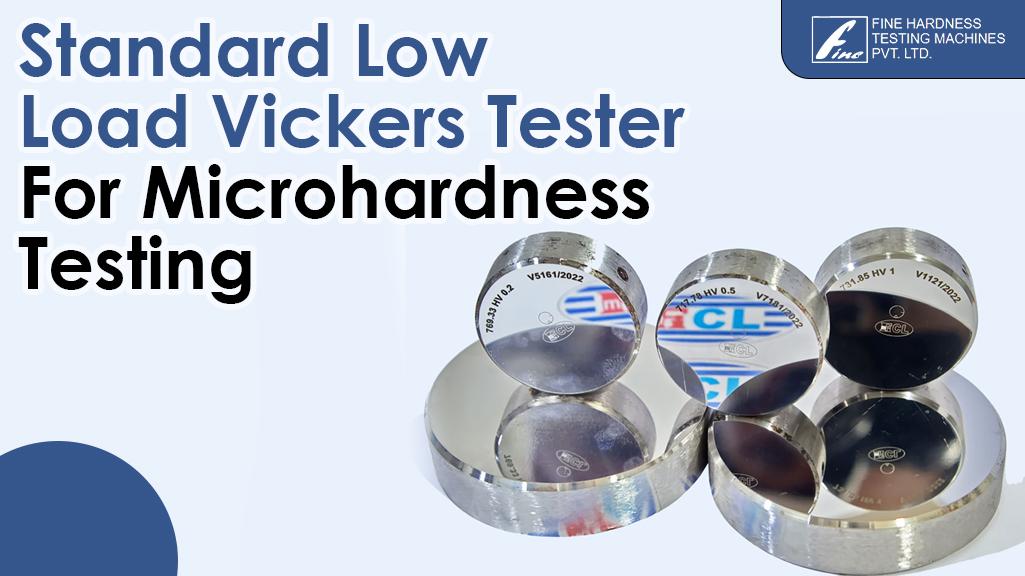
In precision industries, even the smallest material variations can impact product performance. That’s where a Standard Low Load Vickers Tester for microhardness testing becomes essential. It is specifically designed to measure hardness at very low loads, making it ideal for thin materials, coatings, and microstructures. This blog explains how it works, its applications, and why it is widely used in metallurgy and manufacturing.
What is a Standard Low Load Vickers Tester?
A Standard Low Load Vickers Tester is a microhardness testing machine that uses very small loads (typically from a few grams to a few kilograms) to measure the hardness of materials. It uses a diamond pyramid indenter to create a tiny impression on the material surface.
The size of this indentation is measured under a microscope to calculate the hardness value.
How Microhardness Testing Works
The working principle is simple and highly accurate:
- A diamond indenter is pressed into the material
- A low load is applied for a specific time
- The indentation size is measured
- Hardness value is calculated based on indentation
This method allows testing of very small or delicate components without damaging them.
Why Use Low Load Vickers for Microhardness Testing?
- High Precision: It provides accurate results for very small test areas.
- Ideal for Thin Materials: Suitable for coatings, films, and surface-treated materials.
- Minimal Damage: Low load ensures the material structure is not significantly affected.
- Wide Material Compatibility: Works on metals, alloys, ceramics, and composites.
Applications of Standard Low Load Vickers Tester
-
1. Metallurgical Analysis:
Used to study microstructures and phase distribution in metals.
2. Coating Thickness and Hardness Testing: Perfect for testing surface coatings and plating layers.
3. Electronics and Semiconductor Industry: Used for micro-components where precision is critical.
4. Heat Treatment Verification: Ensures proper hardening and tempering of materials.
5. Automotive and Aerospace Components: Tests small, high-precision parts like gears and turbine components.
Key Features of a Standard Low Load Vickers Tester
- High-resolution microscope for measurement
- Adjustable low load range
- Digital or manual operation
- Accurate indentation measurement system
- Stable and vibration-free design
Advantages of Microhardness Testing
- Enables testing of very small areas
- Provides detailed material insights
- Helps in research and development
- Ensures quality control in manufacturing
- Suitable for advanced materials
Factors Affecting Test Accuracy To achieve reliable results:
- Ensure proper surface preparation
- Avoid vibrations during testing
- Use correct load and dwell time
- Calibrate the tester regularly
Maintenance Tips
- Clean the indenter and microscope regularly
- Check alignment and calibration
- Avoid dust and environmental contamination
- Inspect optical components
Common Mistakes to Avoid
- Using incorrect load for material
- Poor surface polishing
- Misreading indentation measurements
- Skipping calibration
Conclusion
A Standard Low Load Vickers Tester for microhardness testing is an essential tool for industries that demand precision and accuracy. Its ability to test thin materials, coatings, and microstructures makes it invaluable in metallurgy, manufacturing, and advanced research.
By using the right testing methods and maintaining the equipment properly, businesses can ensure high-quality materials and reliable performance.
FAQ (SEO Boost)
It is used to measure hardness of thin materials and microstructures.
Typically from a few grams to a few kilograms.
Because it creates very small indentations without damaging the coating.
Metallurgy, electronics, aerospace, automotive, and research labs.