
How Standard Vickers Test Blocks Ensure Accurate Hardness Testing
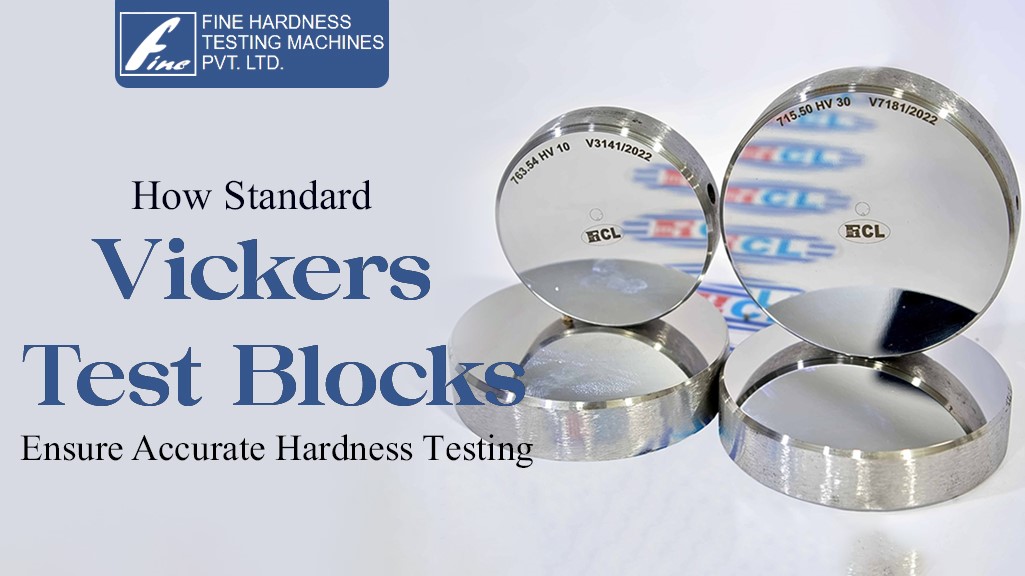
Hardness testing is one of the most widely used methods for evaluating the mechanical properties of metals and engineering materials. Whether manufacturers produce aerospace components, automotive parts, medical devices, or industrial tools, accurate hardness measurements are essential for maintaining product quality and meeting international standards.
However, even the most advanced Vickers hardness tester cannot deliver reliable results without proper calibration. This is where Standard Vickers Test Blocks become indispensable.
These certified reference blocks verify the accuracy of hardness testing machines, minimize measurement uncertainty, and ensure repeatable results across laboratories and manufacturing facilities.
In this guide, you'll learn what Standard Vickers Test Blocks are, why they matter, how they improve testing accuracy, and the best practices for achieving dependable hardness measurements.
What Are Standard Vickers Test Blocks?
Standard Vickers Test Blocks are certified reference materials with precisely measured hardness values. They are specifically manufactured for calibrating and verifying the performance of Vickers hardness testing machines.
Each block undergoes controlled manufacturing, heat treatment, precision finishing, and certified hardness measurement before being supplied with a calibration certificate.
These blocks help ensure that every hardness test produces results within acceptable accuracy limits.
Key Characteristics- Certified hardness values
- Excellent surface finish
- High dimensional stability
- Uniform hardness distribution
- Long-term reliability
- Traceability to recognized standards
Because of these characteristics, Standard Vickers Test Blocks serve as the benchmark for accurate hardness testing.
Understanding the Vickers Hardness Test
The Vickers hardness test measures a material's resistance to plastic deformation.
A diamond pyramid indenter with an angle of 136° between opposite faces is pressed into the material using a predetermined load. After removing the load, technicians measure the diagonal lengths of the indentation using a microscope or digital imaging system.
The hardness value is calculated based on:
- Applied load
- Average indentation size
Smaller indentations indicate harder materials, while larger indentations indicate softer materials.
This testing method offers exceptional versatility because it can evaluate:
- Steel
- Stainless steel
- Aluminum
- Titanium
- Brass
- Copper alloys
- Ceramics
- Thin coatings
- Welded components
- Heat-treated materials
Why Calibration Is Critical in Hardness Testing
Even premium hardness testers gradually drift from their original calibration due to:
- Regular usage
- Mechanical wear
- Environmental conditions
- Vibrations
- Temperature variations
- Optical alignment changes
Without periodic calibration, measurement errors increase over time. These errors can result in:
- Product rejection
- Customer complaints
- Failed quality audits
- Material failures
- Production delays
- Increased manufacturing costs
Standard Vickers Test Blocks detect these deviations before they affect production quality.
How Standard Vickers Test Blocks Ensure Accurate Hardness Testing
1. Verify Machine Accuracy
The primary purpose of a Standard Vickers Test Block is verifying whether a hardness tester produces correct measurements.
If the measured hardness differs from the certified value beyond acceptable tolerance, recalibration or maintenance is required.
This simple verification process prevents inaccurate inspections.
2. Improve Measurement Repeatability
Repeatability refers to obtaining consistent results when testing the same material multiple times.
Using certified reference blocks allows laboratories to confirm that repeated measurements remain stable.
Consistent results improve confidence in inspection reports and product certifications.
3. Reduce Measurement Uncertainty
Every measurement contains some level of uncertainty.
Standard Vickers Test Blocks reduce uncertainty by providing a known reference value that technicians can compare against.
Lower uncertainty leads to:
- Better quality control
- Higher confidence
- More accurate inspection reports
4. Support Compliance with International Standards
Many industries require hardness testing to comply with international standards.
Standard Vickers Test Blocks help organizations meet requirements specified in standards such as:
- ISO 6507
- ASTM E92
- ASTM E384
Using certified calibration blocks demonstrates compliance during quality audits and customer inspections.
5. Detect Instrument Drift Early
Hardness testers gradually lose accuracy after prolonged use. Routine verification using certified blocks helps detect:
- Indenter wear
- Optical alignment errors
- Load application issues
- Mechanical instability
Early detection prevents inaccurate testing from affecting production.
6. Enhance Product Quality
Quality products begin with accurate inspection.
When hardness values are reliable, manufacturers can confidently verify:
- Heat treatment quality
- Material strength
- Wear resistance
- Manufacturing consistency
Accurate hardness testing directly supports customer satisfaction.
Comparison Table
| Without Standard Vickers Test Blocks | With Standard Vickers Test Blocks |
|---|---|
| Higher measurement errors | Verified accuracy |
| Poor repeatability | Consistent results |
| Difficult audits | Easier compliance |
| Higher rejection rates | Better quality control |
| Increased downtime | Early issue detection |
| Uncertain measurements | Reliable certified values |
Essential Features of High-Quality Standard Vickers Test Blocks
Not every calibration block offers the same level of reliability.
High-quality test blocks should include:
- Certified Hardness Values: Each block should include documented hardness measurements.
- Uniform Microstructure: Uniform material composition ensures consistent indentation behavior.
- Mirror Surface Finish: A polished surface improves indentation visibility.
- Calibration Certificate: Certification confirms traceability to recognized measurement standards.
- Excellent Wear Resistance: Durable blocks maintain their accuracy through repeated calibration cycles.
Industries That Depend on Standard Vickers Test Blocks
- Aerospace: Aircraft components require strict hardness verification to ensure structural safety.
- Automotive: Manufacturers inspect gears, shafts, bearings, and engine parts to verify proper heat treatment.
- Medical Device Manufacturing: Surgical instruments and implants require precise hardness measurements for safety and durability.
- Tool Manufacturing: Cutting tools and dies depend on accurate hardness values to achieve long service life.
- Steel Manufacturing: Steel producers verify hardness during production to maintain consistent product quality.
Conclusion
Accurate hardness testing is the foundation of reliable quality control, and Standard Vickers Test Blocks play a critical role in achieving consistent and trustworthy results. By providing certified reference values, these calibration blocks help verify the accuracy of Vickers hardness testers, reduce measurement uncertainty, and ensure compliance with international standards such as ISO 6507 and ASTM.
Whether you operate in aerospace, automotive, medical device manufacturing, tool production, or metal processing, using high-quality Standard Vickers Test Blocks can significantly improve inspection reliability, minimize costly errors, and maintain product quality. Regular calibration not only extends the performance of your hardness testing equipment but also strengthens customer confidence and supports successful quality audits.
Investing in certified Vickers Test Blocks is more than a calibration requirement—it's a commitment to precision, consistency, and excellence in material testing.
After maintenance, the tester produces accurate readings again, preventing unnecessary rejection of perfectly acceptable products.
This simple verification process saves both time and production costs.
Call to Action (CTA)
Looking for high-precision Standard Vickers Test Blocks to ensure accurate and repeatable hardness testing? Fine Hardness Testing Machines Pvt. Ltd. offers certified hardness test blocks manufactured to meet stringent quality standards. Contact our experts today to find the right calibration solution for your hardness testing requirements and improve the accuracy of your quality control process.